
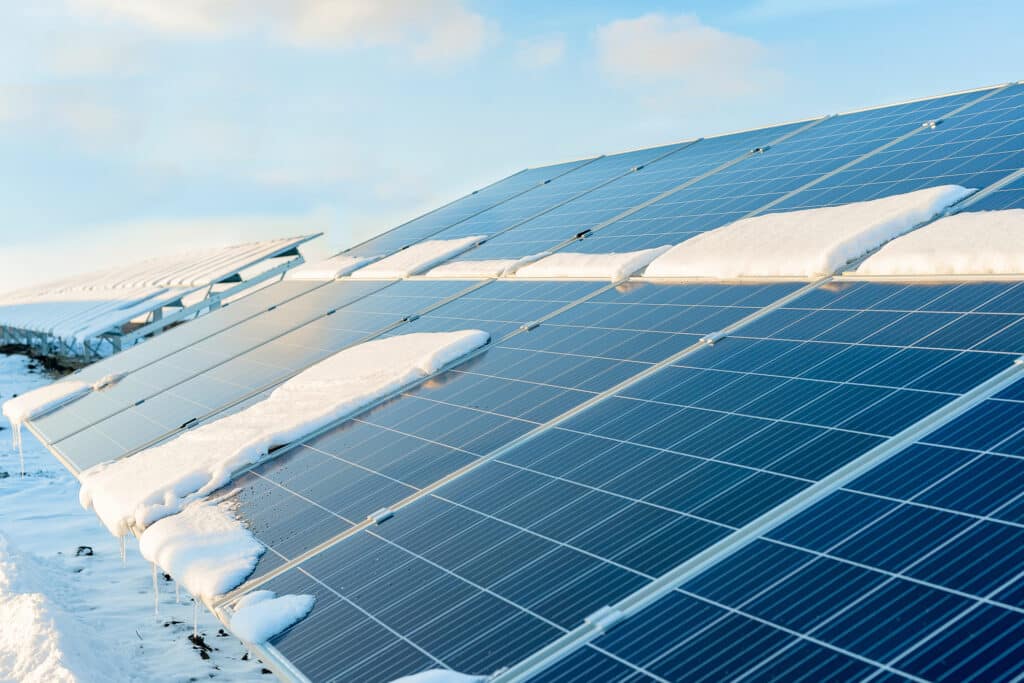
Looking at a snow-covered roof, it's reasonable to wonder how much electricity a solar system could produce. The answer depends on that roof: its direction, slope, shade and how long snow stays on the panels. A single day's output doesn't show how the system will perform over a year.
Does cold weather stop solar panels working?
Solar panels use light to produce electricity. They don't need a warm roof to start working. As the U.S. Department of Energy explains, solar cells generally convert sunlight more efficiently at lower temperatures.
That efficiency benefit doesn't mean a Calgary rooftop will produce more electricity in January than July. The amount of light available matters too. A clear, cold day can be productive, while a short day with heavy cloud or snow-covered panels can produce very little.
When comparing systems, ask about estimated energy production in kilowatt-hours (kWh). Panel efficiency alone doesn't tell you how much electricity your roof will generate in a month.
Why is solar production lower in winter?
In winter, Calgary has fewer daylight hours and the sun sits lower in the sky. Less solar energy reaches the panels over the course of a day. Trees, neighbouring buildings and roof features can also cast shade across an array.
Turning the clocks back doesn't change the amount of daylight. And once it's dark, ordinary rooftop solar panels aren't generating electricity for the house.
Ask the installer to show a month-by-month production estimate, alongside the annual total. Natural Resources Canada's solar resource maps are a useful starting point. For your own home, the installer should explain how the estimate accounts for roof direction, shade and expected snow losses.
What happens when solar panels are covered in snow?
Snow can block the light reaching the cells and reduce output substantially. How long it lasts depends on the snowfall, panel angle and conditions afterwards. Snow losses vary from roof to roof.
Some snow will melt or slide off without intervention. Persistent coverage needs a different conversation with your installer. Ask what snow allowance was included in the production estimate and whether the layout needs any measures to manage snow sliding towards paths or entrances.
Don't climb onto an icy roof or scrape the panels to chase a day's generation. Contact the installer for advice if you're concerned about a heavy buildup or suspected damage, and follow the equipment manufacturer's maintenance guidance.
How do Alberta solar credits help after sunset?
On a sunny day, your solar system supplies the home's immediate electricity needs. Any surplus sent to the grid earns a micro-generation credit through your electricity retailer. After sunset, the house draws power from the grid, and those credits can help offset the bill. Daytime generation can therefore have value even when you use electricity later.
For a grid-connected micro-generation system, the interconnection agreement is with your local distribution company. Your electricity retailer handles the export credits and billing. Alberta's micro-generation guidance explains these separate roles; confirm the applicable rate and billing terms with your retailer.
The credit is a dollar amount on the account. The exported electricity isn't stored specifically for your home and returned at night. Physical storage requires a battery. Grid electricity is still billed, and transmission, distribution and other applicable charges remain.
What should a Calgary solar proposal include?
Start with the roof and your electricity use. The City of Calgary's residential solar calculator can give an initial indication of potential, but the City recommends a detailed assessment before making an installation decision.
Ask for:
- A roof layout showing panel placement, direction and areas of shade.
- The proposed system size, equipment models and estimated monthly and annual production.
- The assumptions behind snow, shade and other expected production losses.
- A review of roof condition and any work needed before installation.
- A clear list of included work, exclusions and who handles permits and the interconnection application.
- An explanation of export credits and the retailer terms used in any bill estimate.
- Written product and installation warranty terms, plus a contact for service questions.
Have your last 12 months of electricity usage available, preferably in kWh. Mention planned changes such as an EV or electric heating, so the conversation covers how you expect to use the home.
If you're also planning home charging, our EV charger installation guide covers the electrical capacity and wiring questions to raise early.
Useful answers
Frequently asked questions
Do solar panels work on cloudy winter days?
They can still generate from the light that reaches them, although output is lower than under stronger sunlight. Cloud cover varies, so avoid treating one cloudy day's reading as a measure of the system's annual performance.
Will solar panels power my house at night?
After dark, a grid-connected home normally uses grid electricity. Credits earned from daytime exports can help offset that cost, even though the panels have stopped generating. A battery is a separate option for storing electricity at home.
Will rooftop solar keep working during a power outage?
A standard grid-connected system usually shuts down during an outage. Backup power requires a system designed to operate safely without the grid, with suitable controls and often battery storage. Ask which circuits it would support and for how long.
How can I tell whether low winter output is normal?
Compare the reading with the installer's estimate for that month and check for monitoring alerts. Weather and visible snow cover may explain a drop. If production remains unexpectedly low in clear conditions, ask the installer to investigate rather than going onto the roof yourself.
Is winter always the cheapest time to buy solar panels?
Not necessarily. Compare written quotes with the same equipment and scope, and ask about the proposed installation schedule. Season alone doesn't tell you whether a price or production estimate is reasonable.
Your next step
Plan solar for your home
Green Origin Energy Solutions serves Calgary and surrounding areas. Share your address, electricity usage and any questions about your roof. We can discuss your plans and the next step for an assessment.
Learn more about our residential solar installation service.
Book a Free QuoteHave a question about your project?
Wondering how solar would work at your home? Ask us here.
Ask a Question
Sources
- Government of Alberta: Micro-generation
- City of Calgary: Residential solar calculator
- Natural Resources Canada: Photovoltaic potential and solar resource maps
- U.S. Department of Energy: Solar photovoltaic performance and efficiency
- U.S. Department of Energy: Solar radiation basics
- U.S. Department of Energy: Solar photovoltaic systems and winter weather
- U.S. Department of Energy: Solar photovoltaic system design basics
- U.S. Department of Energy: Solar inverters and grid services
Green Origin Energy Solutions Ltd. provides residential solar installation in Calgary and surrounding areas. info@greenoriginenergy.com | 368-998-9911